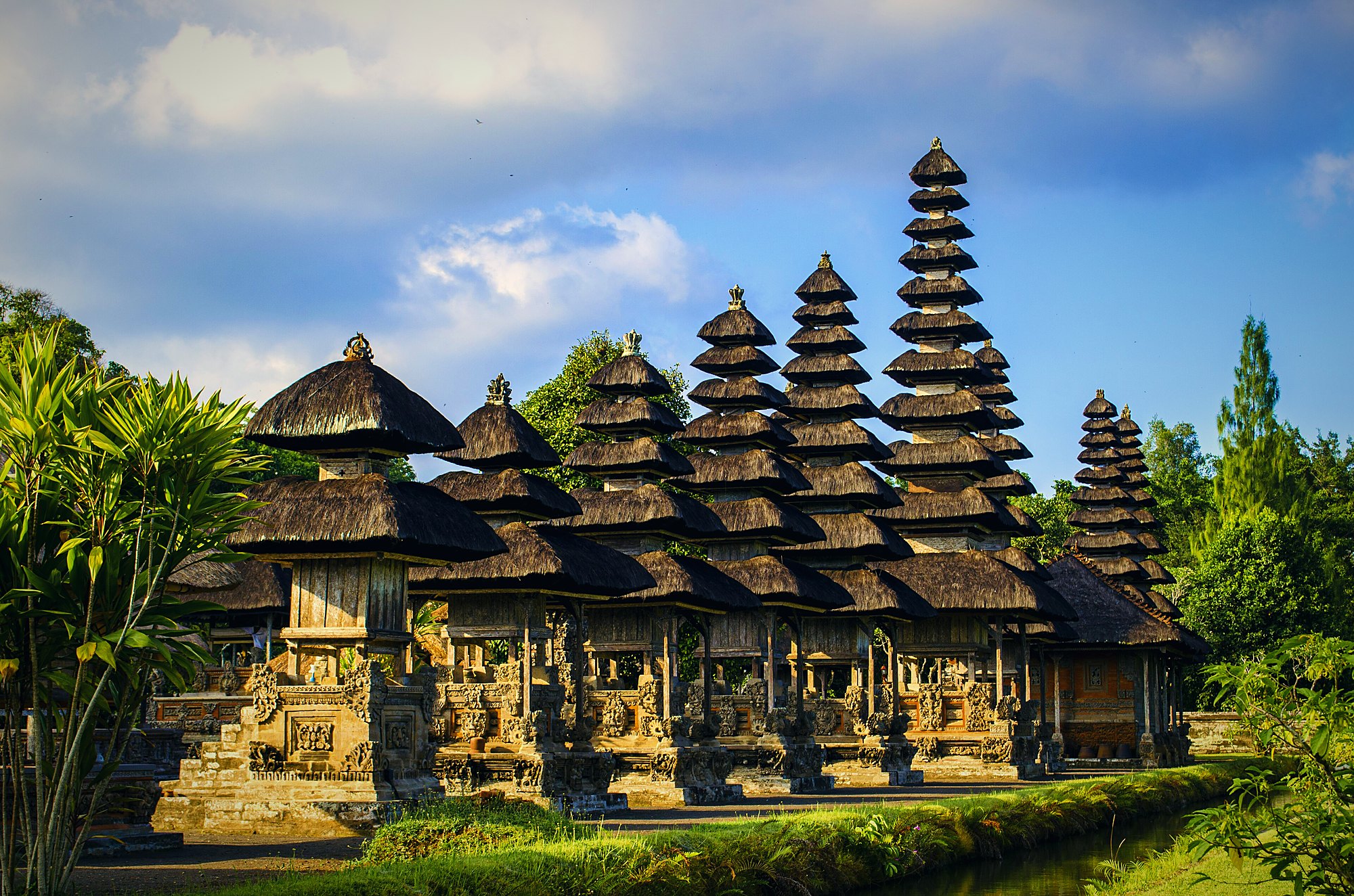
Pura Taman Ayun is the royal family temple of the former Mengwi kingdom, set among lawns and surrounded by a wide moat. Its name is often translated as beautiful garden. In 2012 it was inscribed by UNESCO as one of the components of the Cultural Landscape of Bali Province, recognizing its role in the subak system that shares water among Balinese rice farmers.
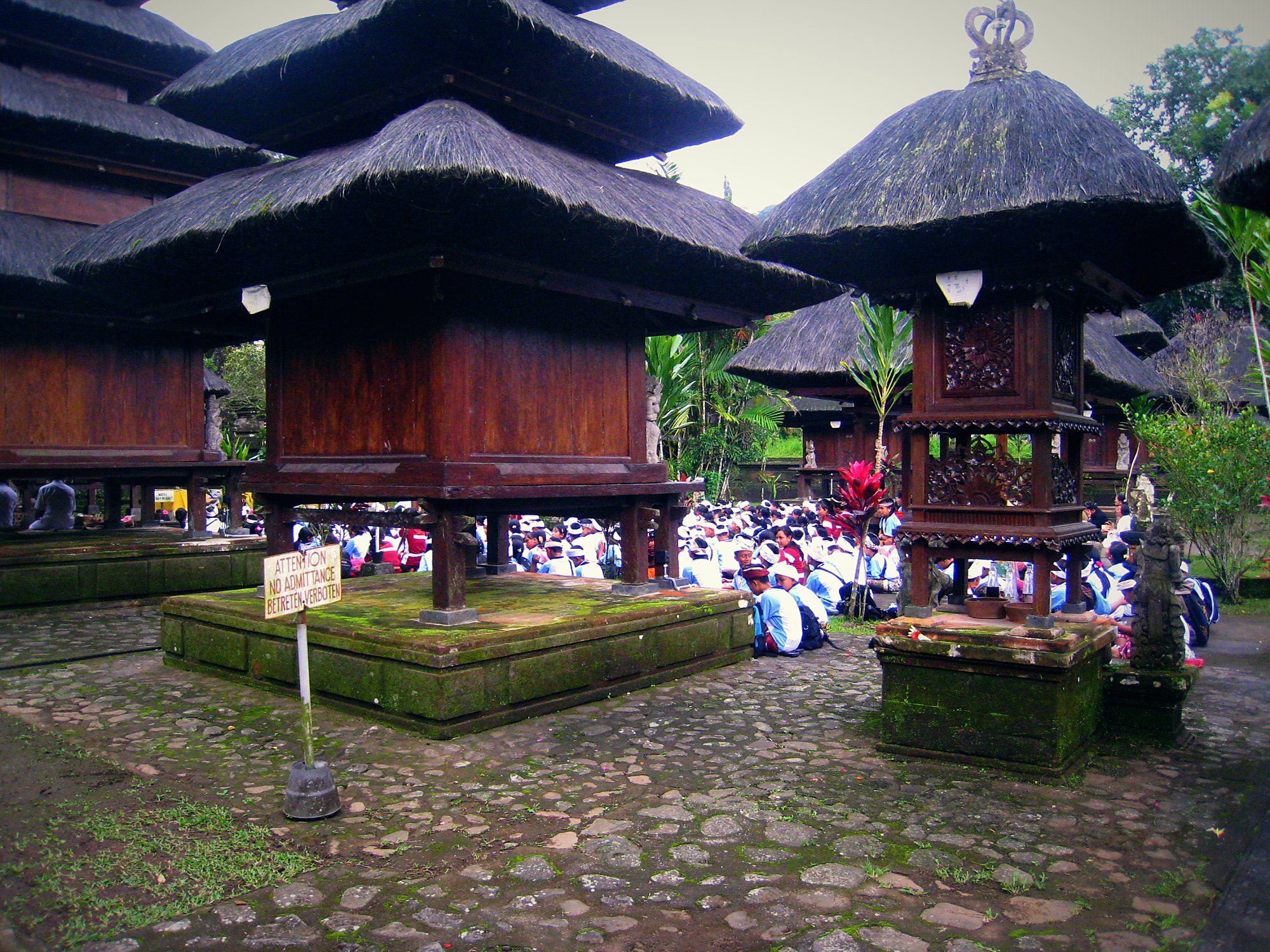
The temple was built in 1634 by Gusti Agung Putu, the King of Mengwi, to honor his ancestors and the Hindu gods. The water around it is part of the local irrigation system, linking royal worship with agriculture. The inner sanctuary holds a row of meru shrines with between two and eleven tiers. Its last major renovation took place in 1937.
A bridge crosses the moat into calm, grassy courtyards that feel open compared with many Balinese temples. The innermost compound is closed to visitors, but a low wall lets you look across at the tiered meru rising in a line, their black thatch layered against the sky. It is a quiet stop, best enjoyed slowly on the way to the highlands.
Highlights
- Row of tiered meru shrines
- Moat and landscaped courtyards
- UNESCO-listed royal water temple
- Calm compared with busier temples
Photos
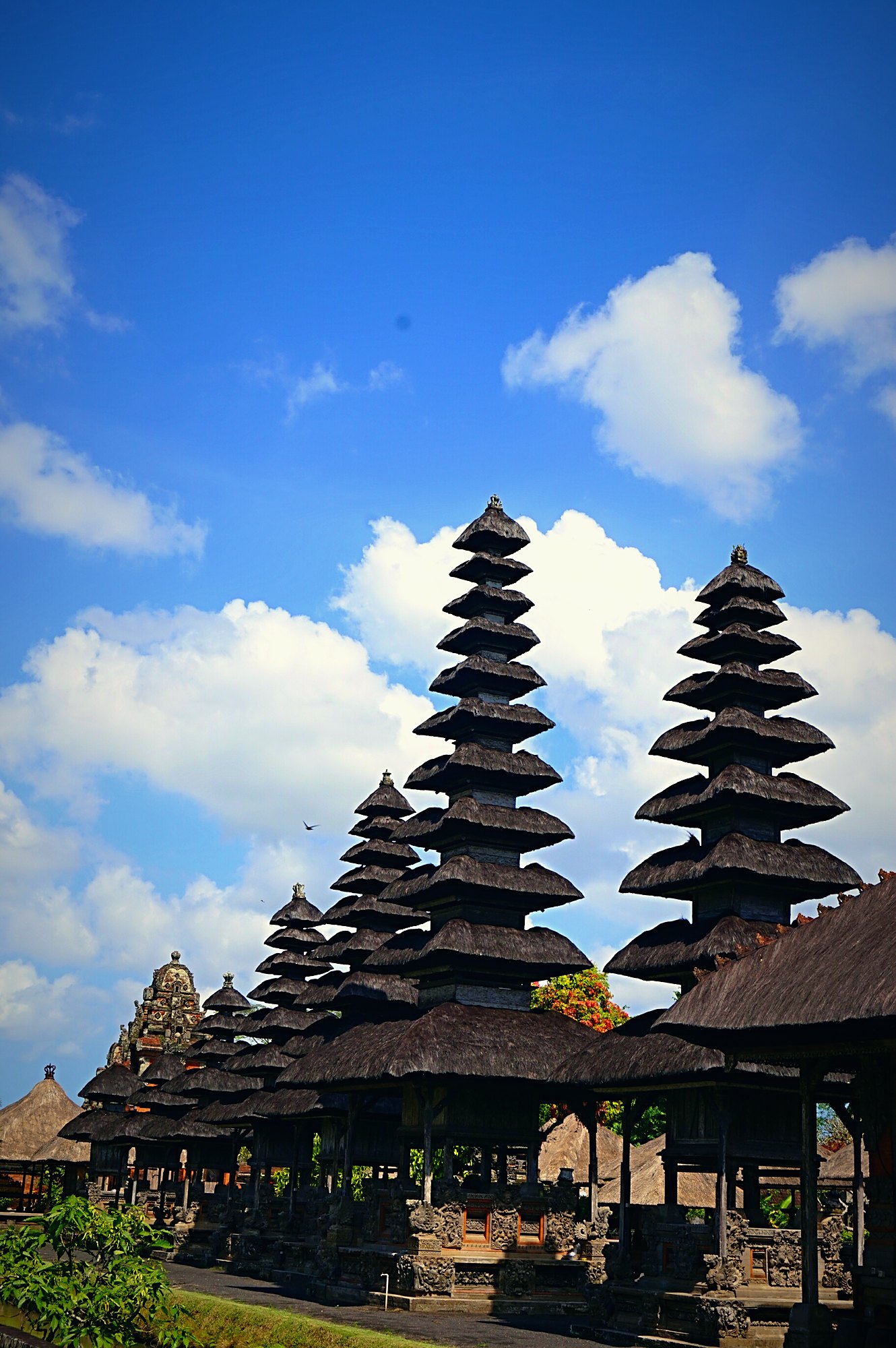
Photos: Cindi CGJ · CC BY-SA 4.0 · edited / Johannnindito Adisuryo (Yohanes Nindito Adisuryo) · CC BY-SA 4.0 · edited
Good to know
- Combine Taman Ayun with a drive to Bedugul or Jatiluwih, as it lies on the way to the highlands.
- Walk the path around the inner wall for the best views of the meru.
- Stay outside the inner sanctuary, which is reserved for worship.
On the map

Bali: Culture, Tradition & Religion
Offerings, ceremonies, temples and beliefs: 100 short chapters on what makes Balinese culture unlike anywhere else.