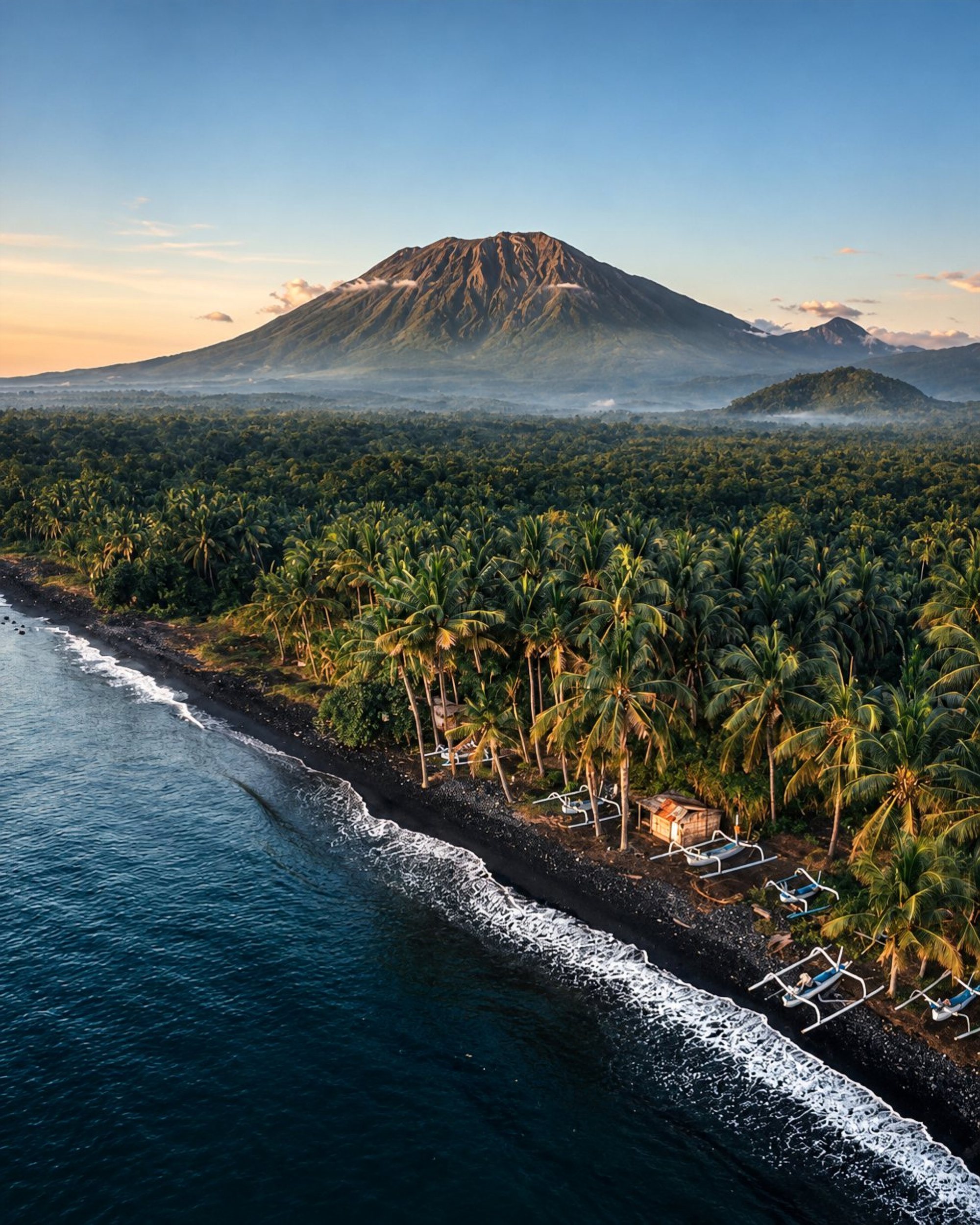
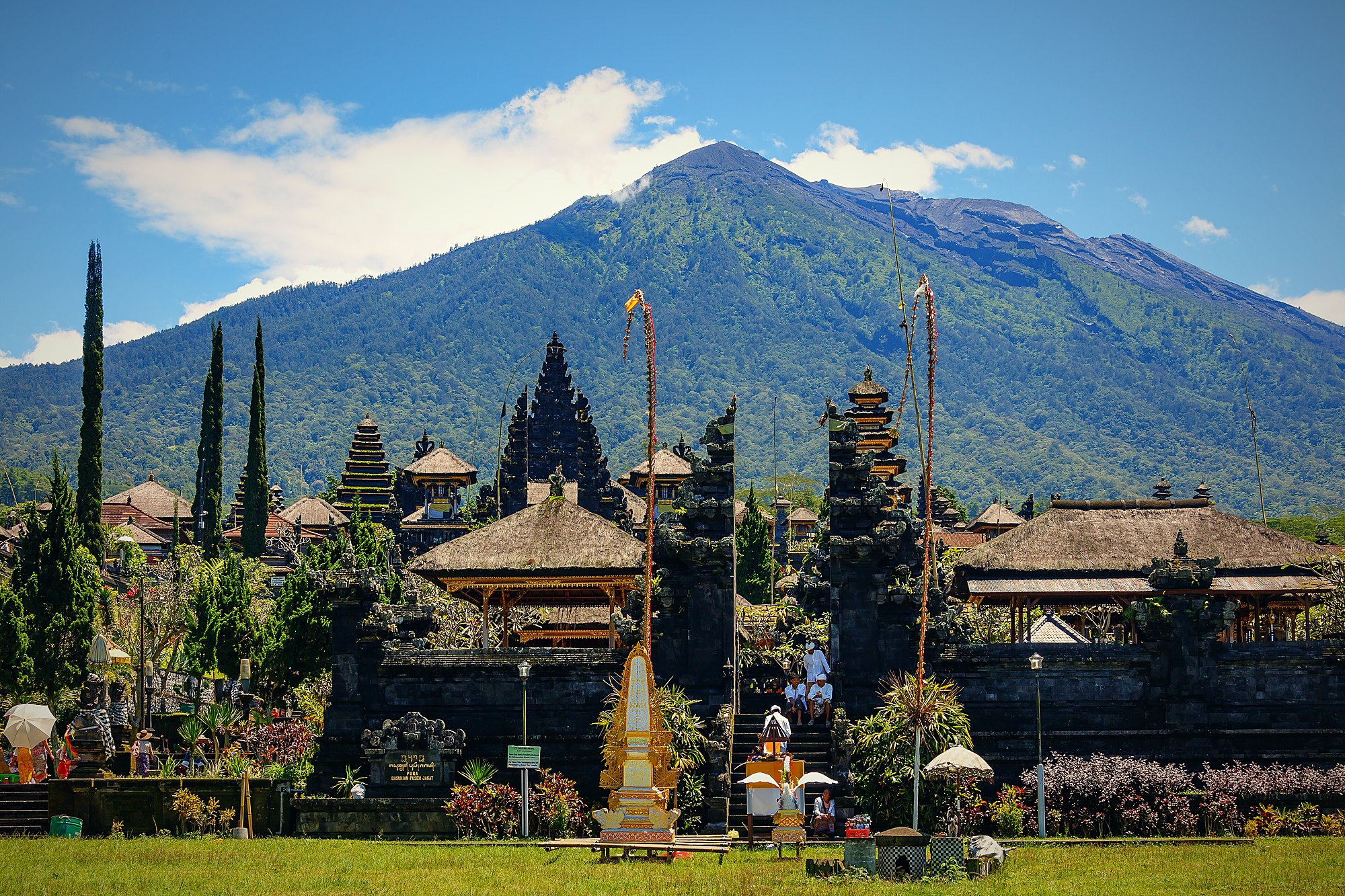
Pura Besakih is known as the Mother Temple of Bali, the highest-ranking sanctuary on the island. It spreads across parallel ridges nearly 1,000 meters up the southwestern slopes of Mount Agung, Bali's highest volcano at 3,031 meters. The complex includes 23 related temples, with Pura Penataran Agung as its largest and most important, and it sits at the center of Bali's nine directional temples.
Its stepped terraces rest on megalithic foundations thought to be at least 2,000 years old. Tradition credits the first temple to the 8th-century sage Rsi Markandeya, and by the 15th century Besakih had become the state temple of the Gelgel kingdom. When Agung erupted in 1963, killing around 1,700 people, the lava flows passed within meters of the complex, which many Balinese saw as a sign of divine protection.
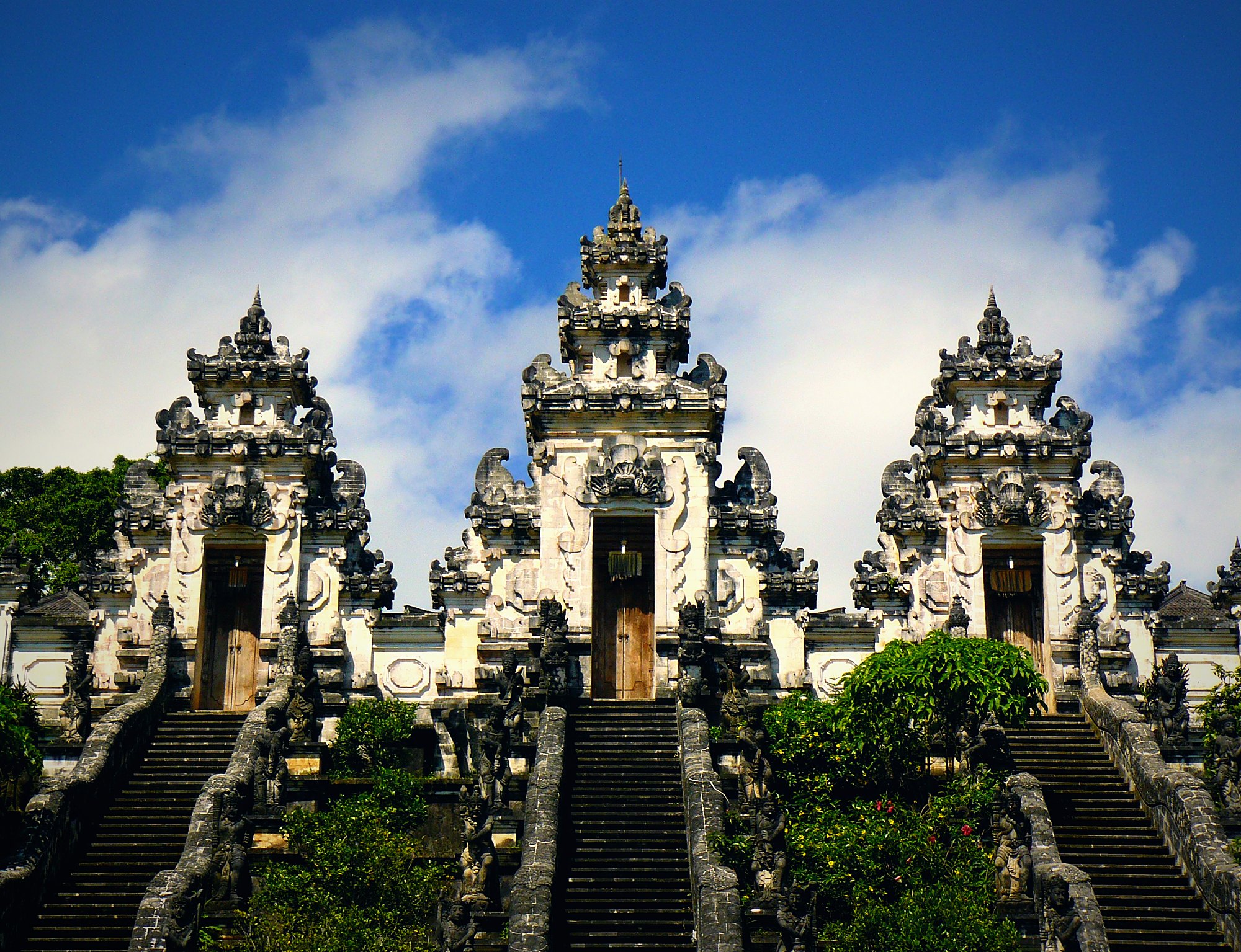
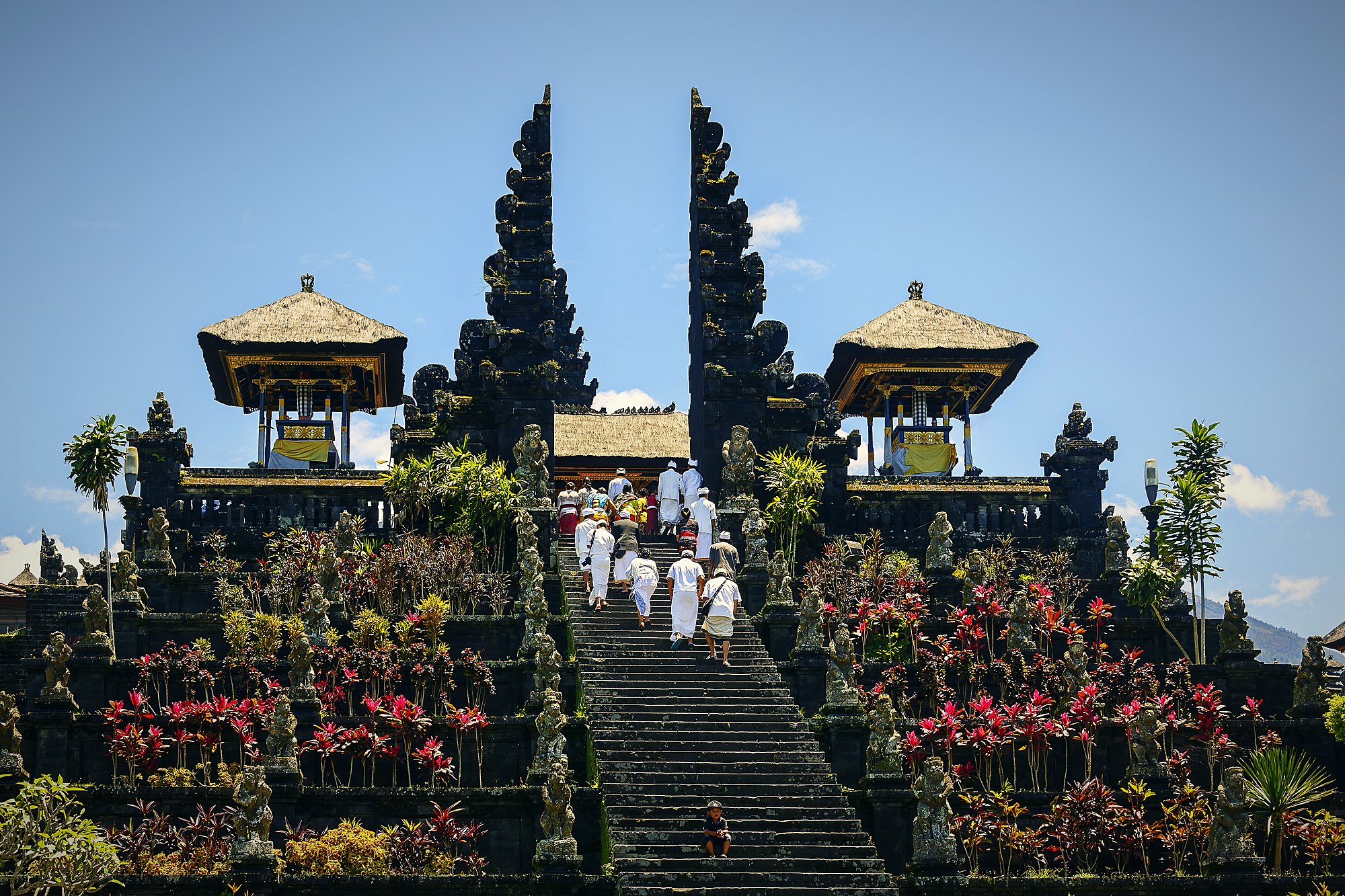
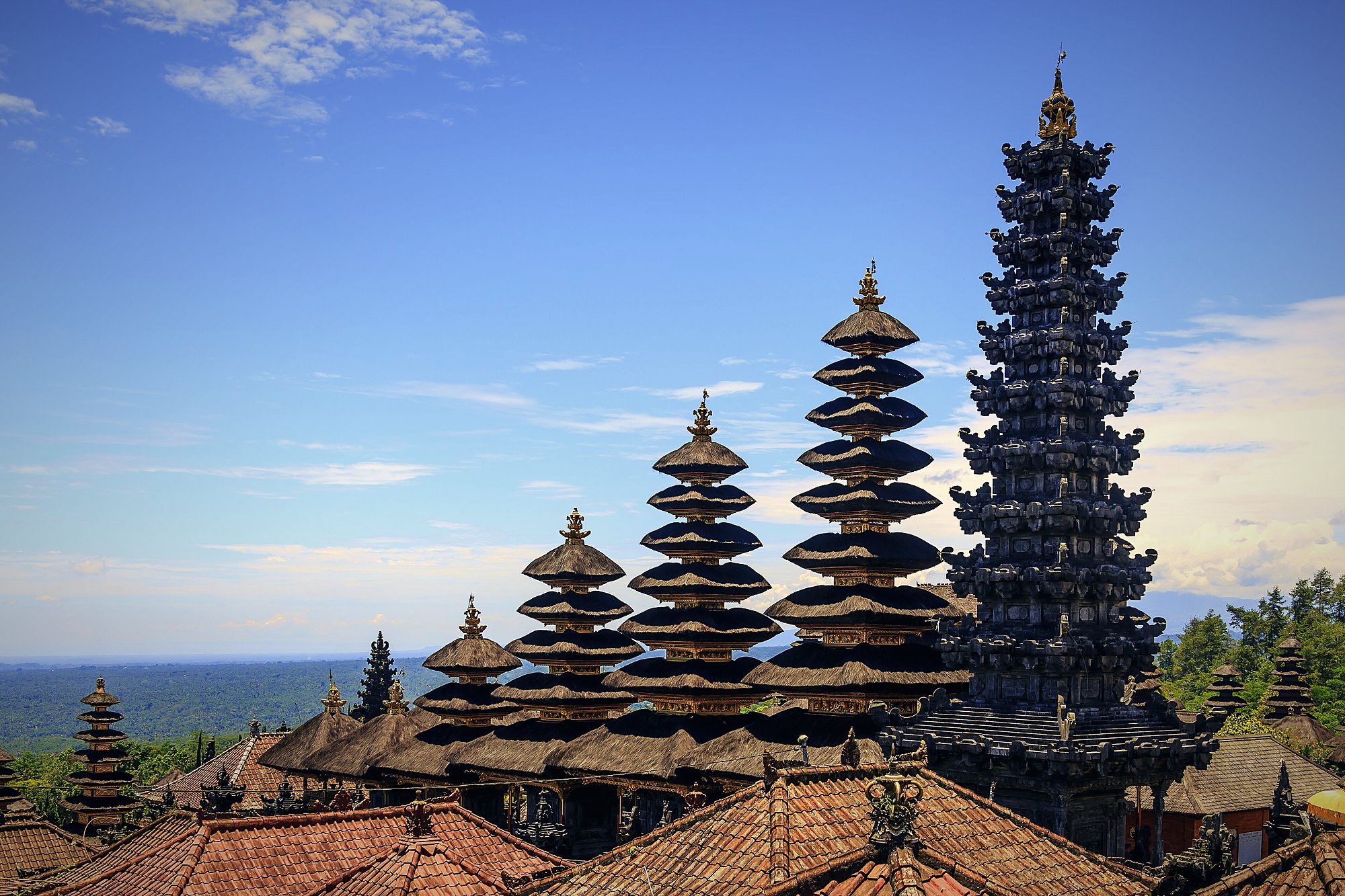
Visiting means climbing through tiers of courtyards, split gates and black-thatched meru towers, with the mountain rising behind and, on clear days, views running down to the coast. Families arrive dressed in white carrying offerings, and on festival days the stairways fill with processions. Mornings are usually clearest, before cloud settles over the summit. Allow time simply to sit and watch the rhythm of worship.
Highlights
- Pura Penataran Agung and its lotus throne
- 23 temples across the slopes of Mount Agung
- Views of Agung on clear mornings
- Ceremonies with pilgrims in white
Photos
Photos: CEphoto, Uwe Aranas · CC BY-SA 3.0 · edited / CEphoto, Uwe Aranas · CC BY-SA 3.0 · edited / CEphoto, Uwe Aranas · CC BY-SA 3.0 · edited
Good to know
- Arrange a guide at the official visitor center, and politely decline offers from unofficial guides along the road.
- Many inner courtyards are open only to worshippers, so follow the marked visitor routes.
- Bring a light jacket; the temple is cooler and often misty compared with the coast.
- Check the Balinese calendar, since major ceremonies can close areas but are remarkable to witness from a respectful distance.
On the map

Bali: Culture, Tradition & Religion
Offerings, ceremonies, temples and beliefs: 100 short chapters on what makes Balinese culture unlike anywhere else.